Why we chose StudyHub
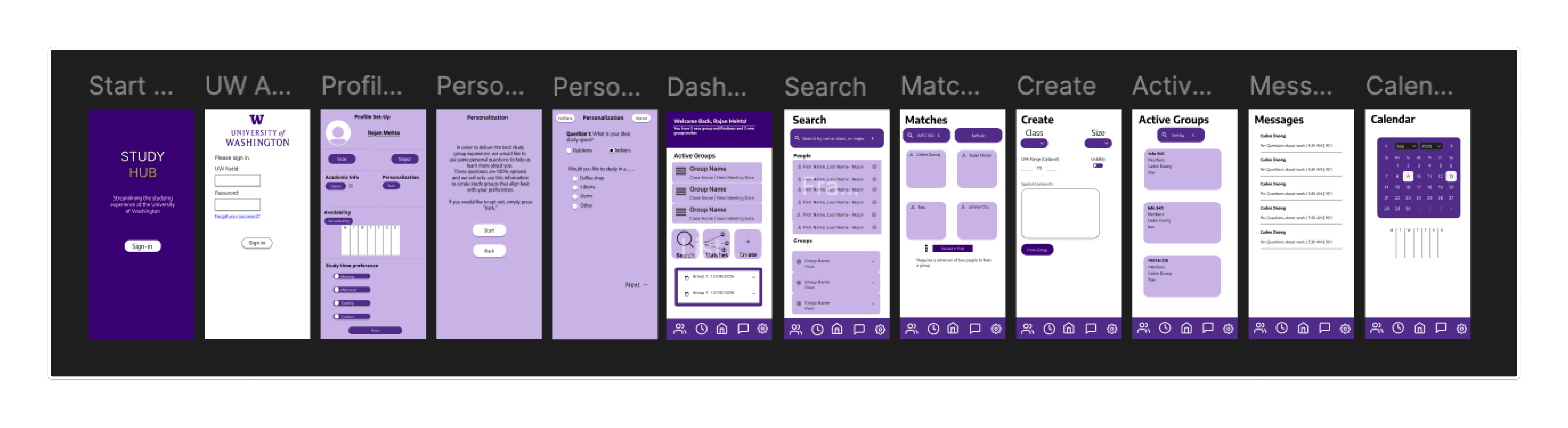
We chose an AI-powered web platform because our research showed students do not lack communication tools; they lack intelligent, trust-building matching before the social risk of reaching out. StudyHub combines course-aware matching, personality data, transparent reasoning, and structured first sessions in one place, rather than asking anxious students to self-organize on Discord or swipe through profiles without context.
Why this design is better than alternatives
Unlike Discord, StudyHub moderates compatibility rather than leaving students to self-sort in chaotic channels. Unlike Sidekick, it addresses the behavioral gap of showing up, not just browsing matches. Unlike Studicata, it targets the general undergraduate population at UW while still allowing course-specific depth. Compared to word-of-mouth group formation, it proactively reaches students without existing networks.
How research influenced our design
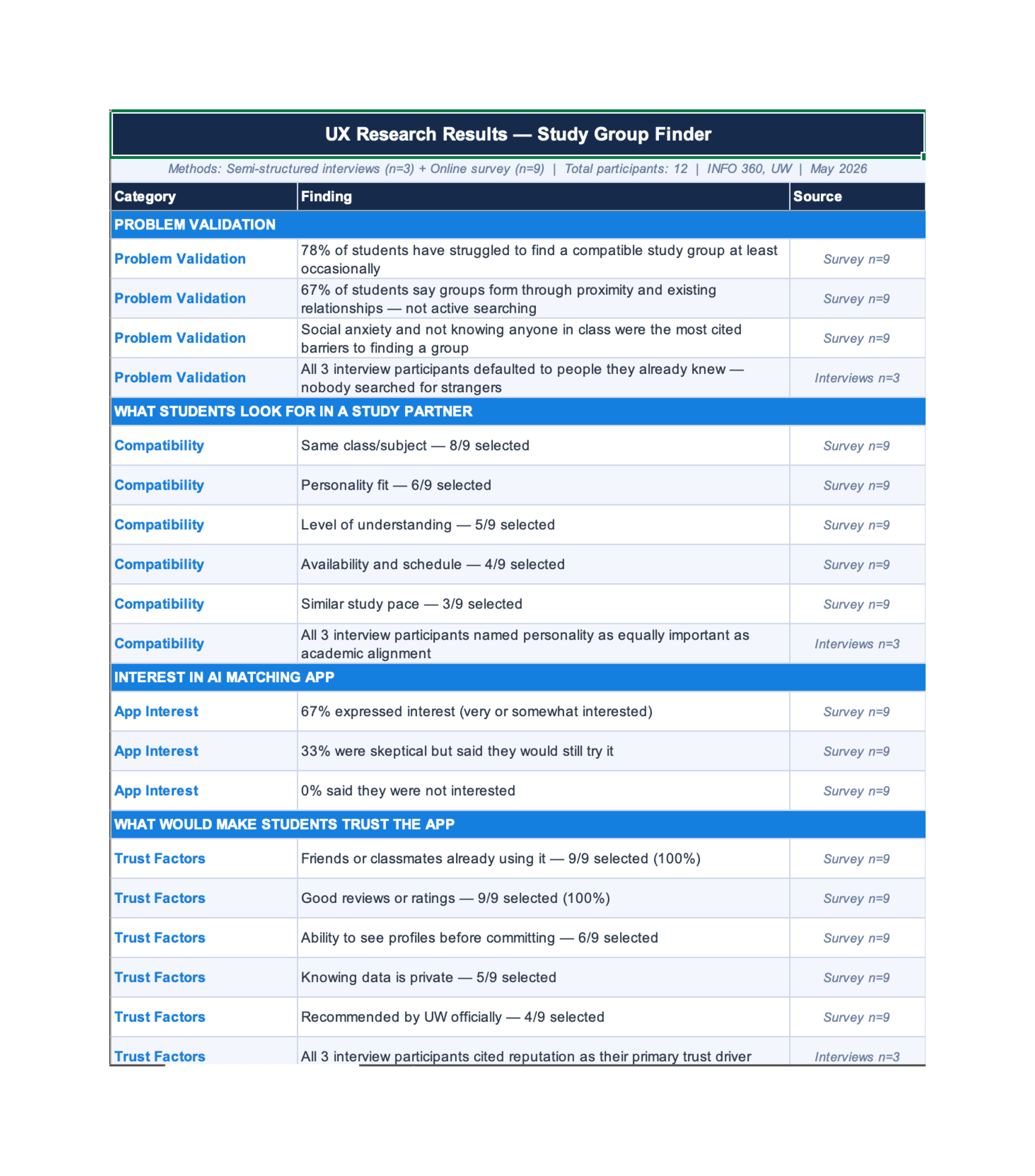
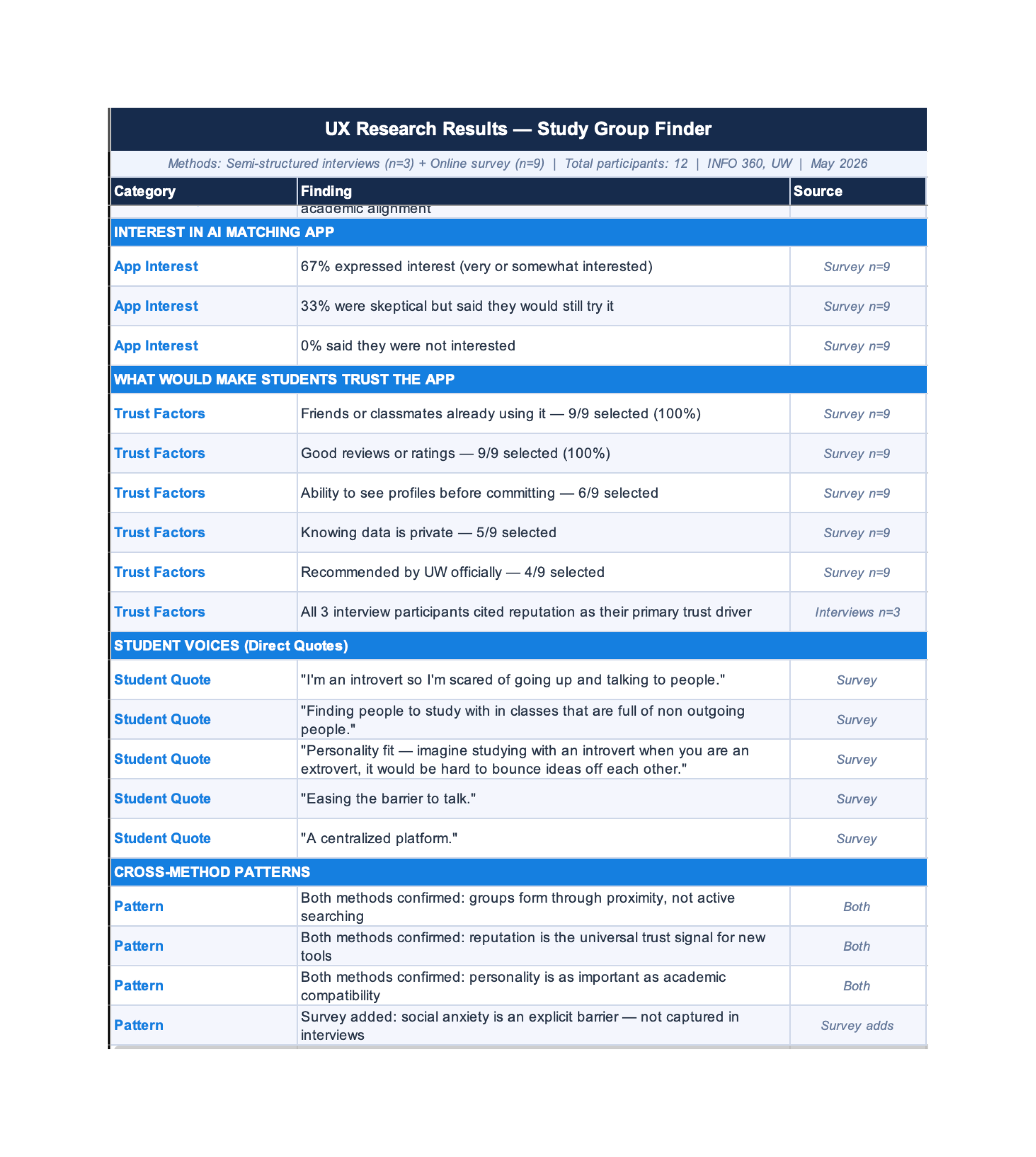
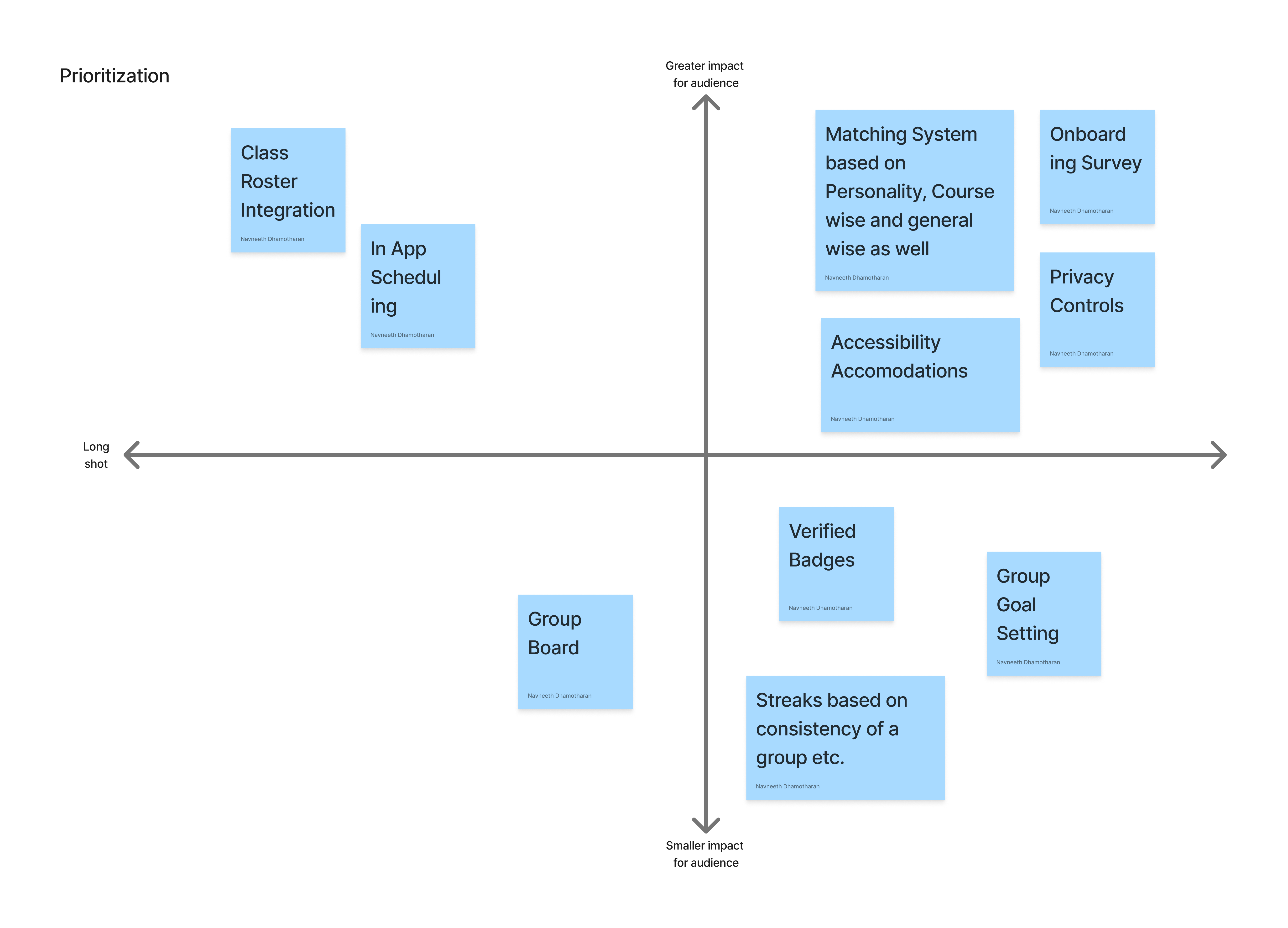
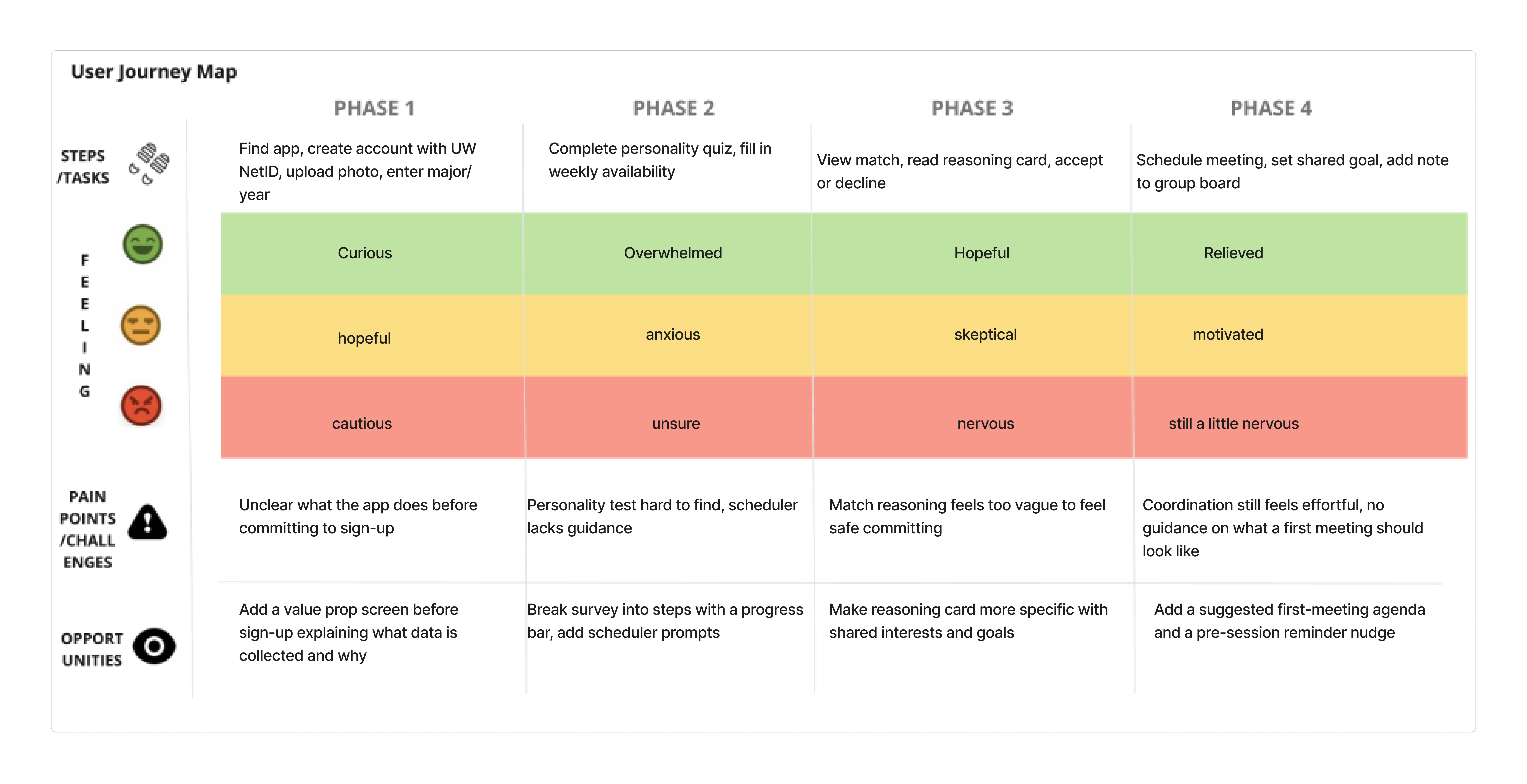
Interviews and surveys directly shaped our feature priorities: profile preview before committing, reputation-driven trust signals, plain-language match explanations, and introvert-first onboarding. Usability testing further revealed that personality test discoverability and schedule setup are make-or-break moments, driving our redesign priorities.
Personality-first matching
Students consistently rated personality alongside or above academic factors. Bad group experiences were described as personality mismatches, not just academic ones.
Because: Research showed personality fit is as important as academic alignment.
Trade-off: More profile data raises surveillance concerns; we must be transparent about how matches are made.
Profile visibility before committing
Students need to feel safe before committing to a stranger. Seeing profiles before joining was selected by 6/9 survey respondents.
Because: Familiarity reduces the risk of a bad match; we surface enough info to build trust without overwhelming.
Trade-off: More visibility vs. privacy; we balance transparency with data protection (value-sensitive design).
Algorithmic optimization with user agency
Students default to people they already know because it feels safe. An AI matcher asks students to trust a system over their own instincts.
Because: Literature (García-Vélez et al., 2021; Revelo Sánchez et al., 2021) shows data-driven matching outperforms self-organized groups.
Trade-off: Too much user control defeats the purpose; too little feels like lost autonomy. Designing the handoff is critical.
Designed for introverts first
The core challenge is not technical but behavioral. Algorithmic matching only creates value once students feel safe enough to share personal details and act on a recommendation.
Because: Affinity mapping surfaced that introverts and anxious students need alternative entry points that don't require initiating contact.
Trade-off: Optimizing for anxious users may feel slower for extroverts who prefer spontaneous group formation.
Affinity map and empathy synthesis
Our affinity mapping session organized interview and survey data into user needs, recurring problems, and design opportunities. This synthesis served a similar role to an empathy map by centering student emotions around safety, trust, and social risk.
User Needs
- Feel safe sharing personal details
- Low-pressure group entry
- Transparent match reasoning
- Matched on goals & habits
Recurring Problems
- Schedule alignment barriers
- Skepticism toward algorithms
- Fear of being the least knowledgeable
- Introverts need alternative entry points
Opportunities
- Plain-language match explanations
- Introvert-first default experience
- Structured first-session flow
- Mid-semester re-matching
Key insight: The core challenge of an AI-powered study group platform is not technical but deeply behavioral and social. The most critical design problem is reducing perceived social risk at the moment of first contact, not perfecting the matching logic itself.
Value-sensitive design
Because the platform serves the UW community, we prioritized data protection while ensuring a smooth experience. Personality is the primary driver in group formation, prioritizing human compatibility and wellbeing over pure academic efficiency. A tension exists between user autonomy and algorithmic optimization: students default to people they already know because it feels safe. Designing the handoff without making users feel they've lost control is a challenge we continuously account for.
Participatory design
Core design decisions (personality-based matching, profile visibility before committing, and reputation-driven trust signals) were surfaced by students themselves and validated across both interview and survey methods. Our participants acted as informants rather than co-designers, and our sample was relatively homogeneous (largely freshman males), which limits how fully our design represents the diversity of the UW student population.